The College signed the Memorandum of Understanding on International Academic Cooperation with the Europa Institute of Leiden University on Haidian Campus on the morning of 24 Nov.
Director of the Europa Institute at Leiden University Professor Armin Cuyvers, Dean of the College Professor Xie Zhiyong, Director of the Institute of European Law of the College Professor Zhang Tong, Research Fellow of the Institute and Deputy Director of the College Office Mrs. Li Li attended the signing ceremony.

At the outset, Jie Zhiyong extended a warm welcome on behalf of the College to Director Cuyvers. He provided a detailed overview of the College’s disciplinary strengths, student enrollment scale, talent-training model and international student-exchange programmes, emphasising that the College has now entered a new stage of development. He noted in particular that the College welcomed its first cohort of undergraduate students (Class of 2025) this year, and that the construction of the EU law track has become an important component of this new phase.
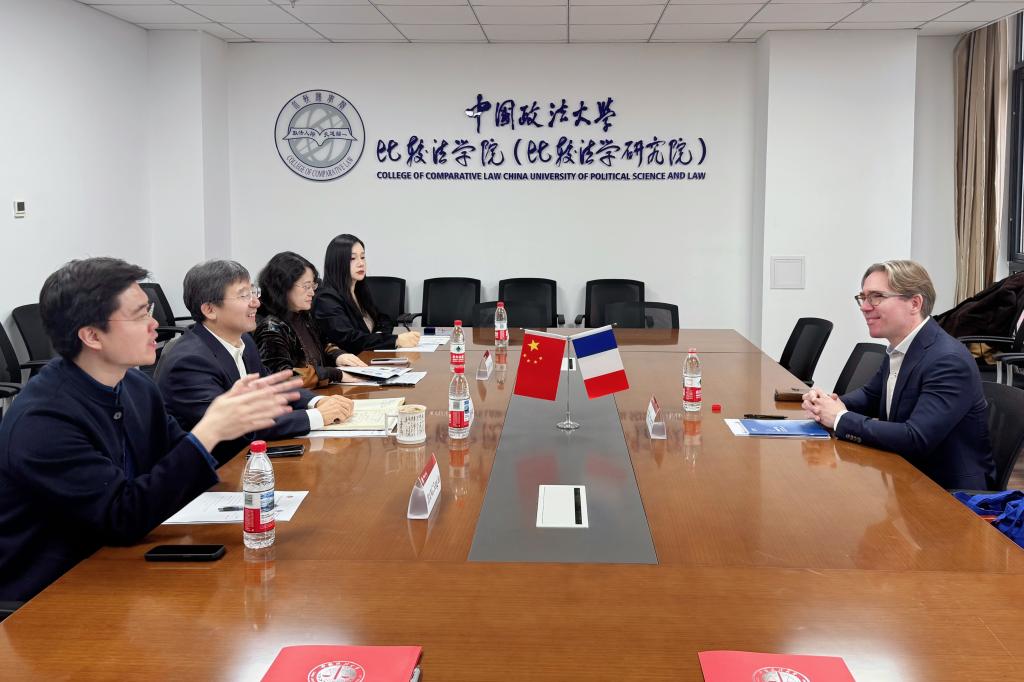
Cuyvers introduced the history and academic profile of the Europa Institute, founded in 1957, the same year the European Economic Community—the predecessor of today’s European Union—came into being. As one of the world’s earliest academic institutions dedicated to researching EU law (formerly European Community law) and the European Convention on Human Rights, the Institute has played a pioneering role in the field. He added that the Institute hosts several specialised research platforms with a strong regional comparative-law focus, such as the Centre for East African Community Law, and employs around 50 full-time researchers, covering cutting-edge areas including EU external economic relations, digital governance, cybersecurity, competition law and sustainable development.
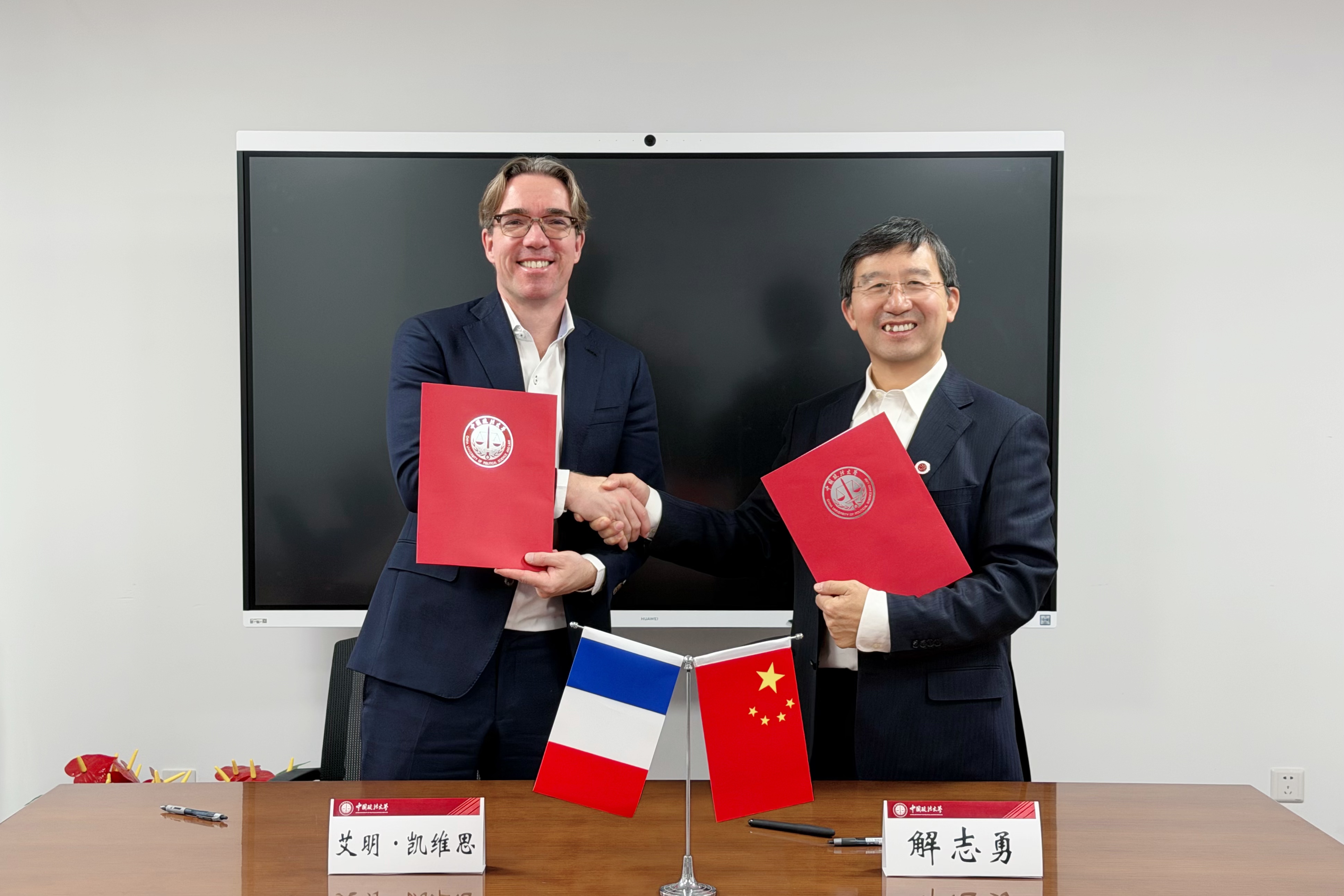
Both parties expressed a shared willingness to deepen cooperation in areas such as faculty exchanges and academic collaboration. Representatives of both institutions formally signed the Memorandum of Understanding, marking the beginning of substantive cooperation in fields including faculty visits, student exchange programmes and joint doctoral training.