The fifteenth Sino-German Constitutional Forum: the Right to Equality, jointly organised by the Constitutional Law Institute of CUPL’s School of Law, the Institute of Sino-German Law of the College, and the Friedrich-Ebert-Stiftung, was successfully held in Beijing on 6 Sept.
The forum brought together renowned scholars and judges from China and Germany for in-depth discussions centred on the core theme of the right to equality.
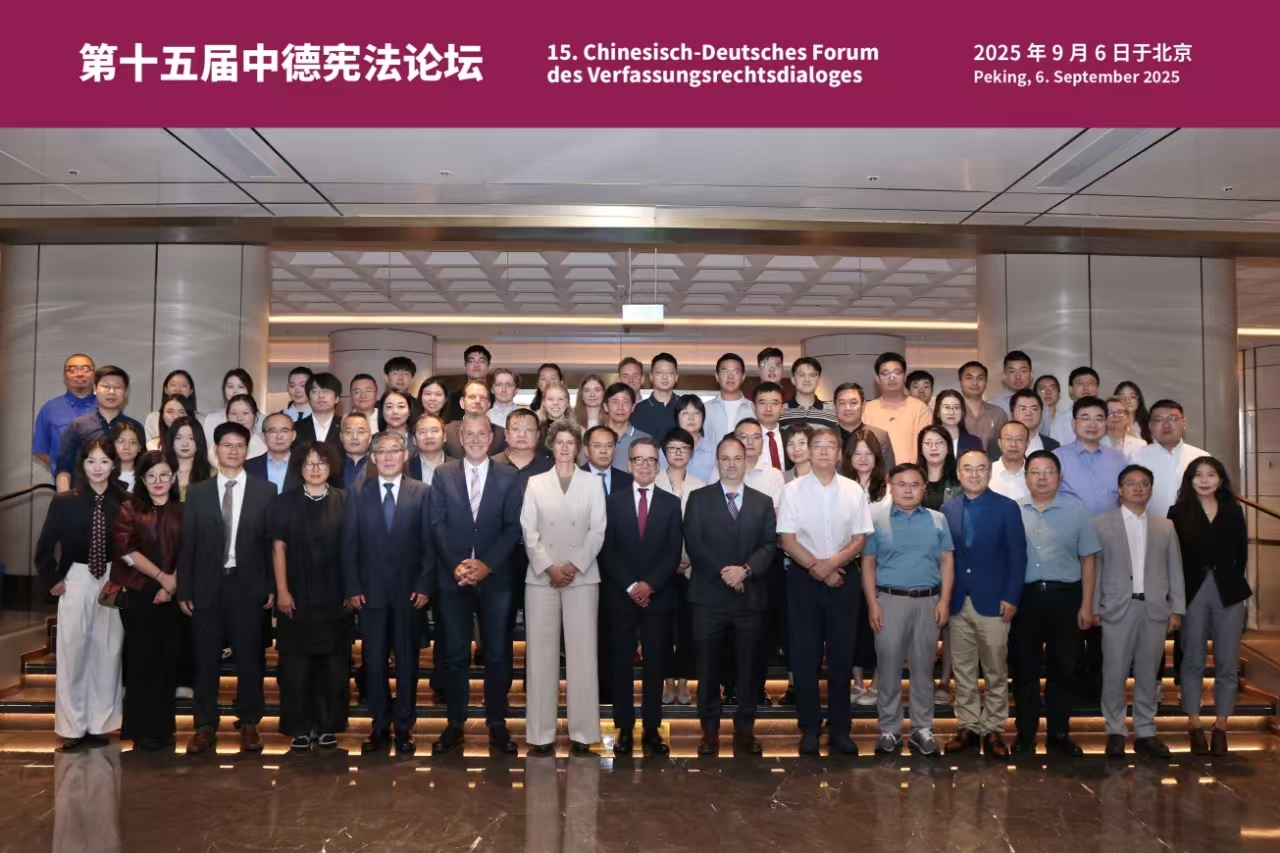
The conference consisted of three thematic sessions, focusing respectively on the general right to equality, gender equality and special equality rights. German speakers included former Federal Constitutional Court Justice Professor Reinhard Gaier, President of the Constitutional Court of Rhineland-Palatinate Professor Lars Brocker, and Federal Court of Justice Judge Ms. Barbet Pohl. They delivered keynote reports on the general constitutional guarantee of equality, gender equality and the equal protection of persons with disabilities.
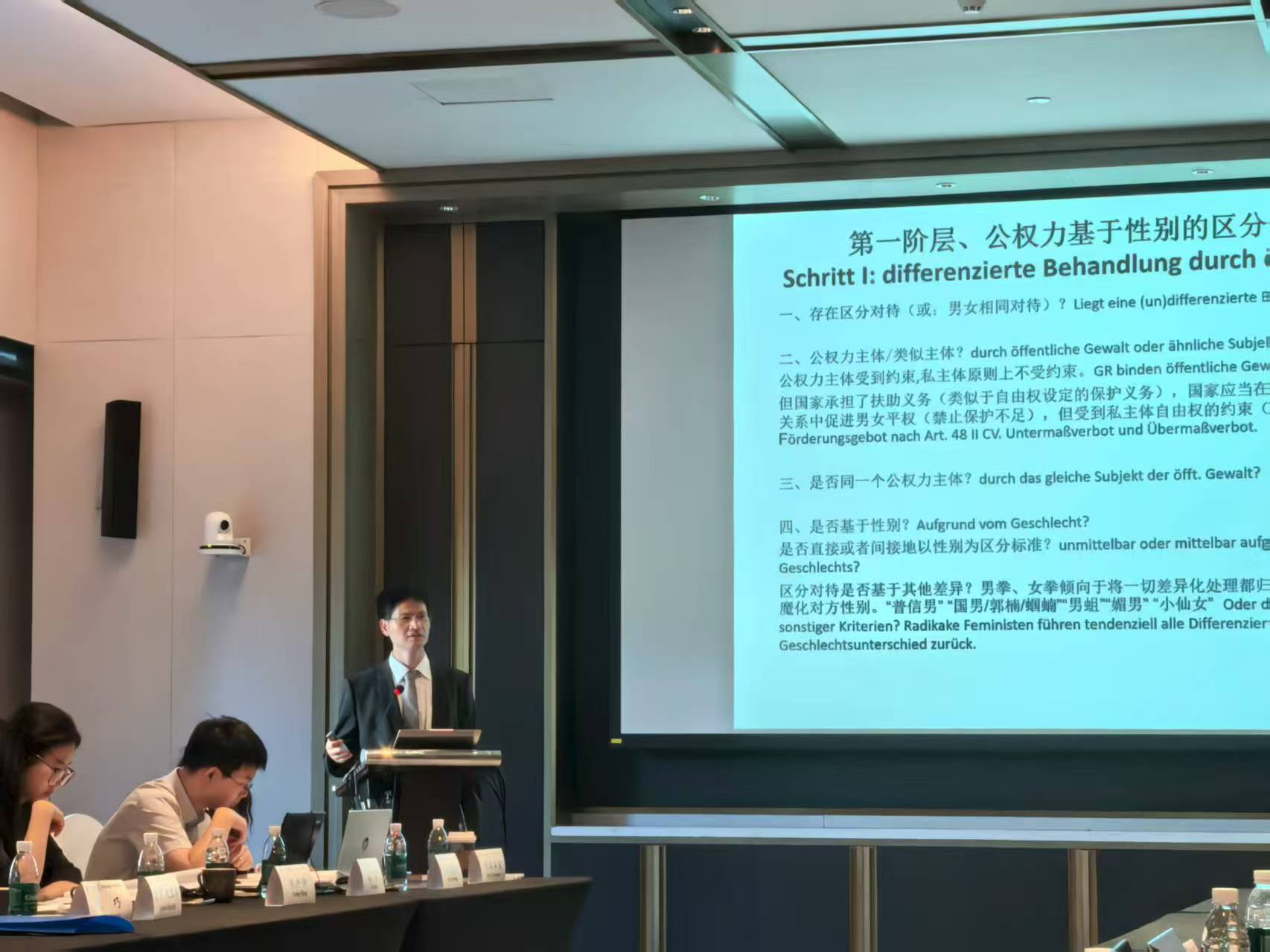
Chinese scholars also engaged actively in the discussion. Professor Xie Libin of the Institute of Sino-German Law, Professor Zhang Lyuhao of the School of Law, and Professor Jiang Feng of Sun Yat-sen University delivered presentations on topics such as the analytical framework for gender equality review, liberal conceptions of equality, and theoretical reflections on anti-discrimination in employment in China. Scholars from Peking University, Renmin University of China, Fudan University, and the Institute of Law of the Chinese Academy of Social Sciences served as moderators and commentators, contributing to a vibrant and intellectually stimulating dialogue.
Since 2010, CUPL has hosted the Sino-German Constitutional Forum annually, each year selecting major constitutional topics such as ‘human dignity’ and ‘social fundamental rights’ as its themes. Now in its fifteenth year, the Forum continues the tradition of constitutional dialogue between China and Germany, providing a valuable platform for scholarly exchange. This year’s event further advanced theoretical development on the constitutional right to equality and facilitated the sharing of practical experience, earning unanimous praise from participating scholars.